Broadly speaking, my research helps explain how policymakers in China respond to issues in society. I analyze how public policy is made and implemented in China, especially how different people and groups influence decisions, how policymakers respond to crisis events, what causes policies to change, and what the policies actually say and do—for example, whether they are feasible, strict, and predictable.
Policy process research is important because public policies shape people’s everyday lives—from public health and environmental protection to economic opportunity and social stability. Understanding how decisions are made helps explain why some problems are addressed effectively while others persist. This is particularly significant in China, where policy decisions affect a large and diverse population and often have global implications, from public health to environmental sustainability.
From a theoretical perspective, my research is embedded in the policy process literature, especially the Multiple Streams Framework and the Punctuated Equilibrium Theory. These and other policy process theories have been developed in North America and Europe. My research uses these theories in China to help understand how policymaking in China is different and whether these “foreign” theories have explanatory power in this different political context. More recently, I have begun extending this line of inquiry to other political systems with similar institutional characteristics, allowing for broader comparative insights into how policy processes operate beyond democracies in Europe and North America.
I examine these policymaking processes in two interrelated areas: health and the environment. In health, I analyze how governments in China respond to disease outbreaks and antibiotic resistance. In the environmental field, I analyze how different stakeholders respond to pollution and advance urban sustainability.
Selected completed projects
Patterns in Policymaking: The Punctuated Equilibrium Theory in China
– with Jialin Cammie Li (University of Arizona)
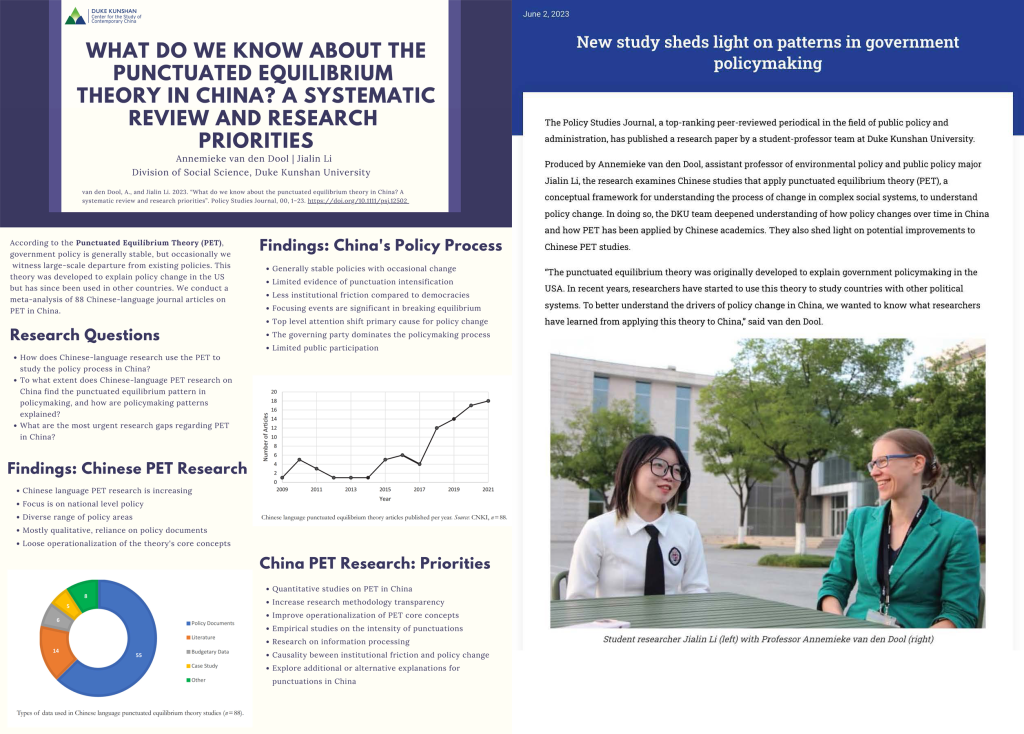
According to the Punctuated Equilibrium Theory (PET), government policy is generally stable, but occasionally we witness large-scale departure from existing policies. We conducted a meta-analysis of 88 Chinese-language journal articles on PET in China. This project has been published in the Policy Studies Journal (2023). Read the full text here. 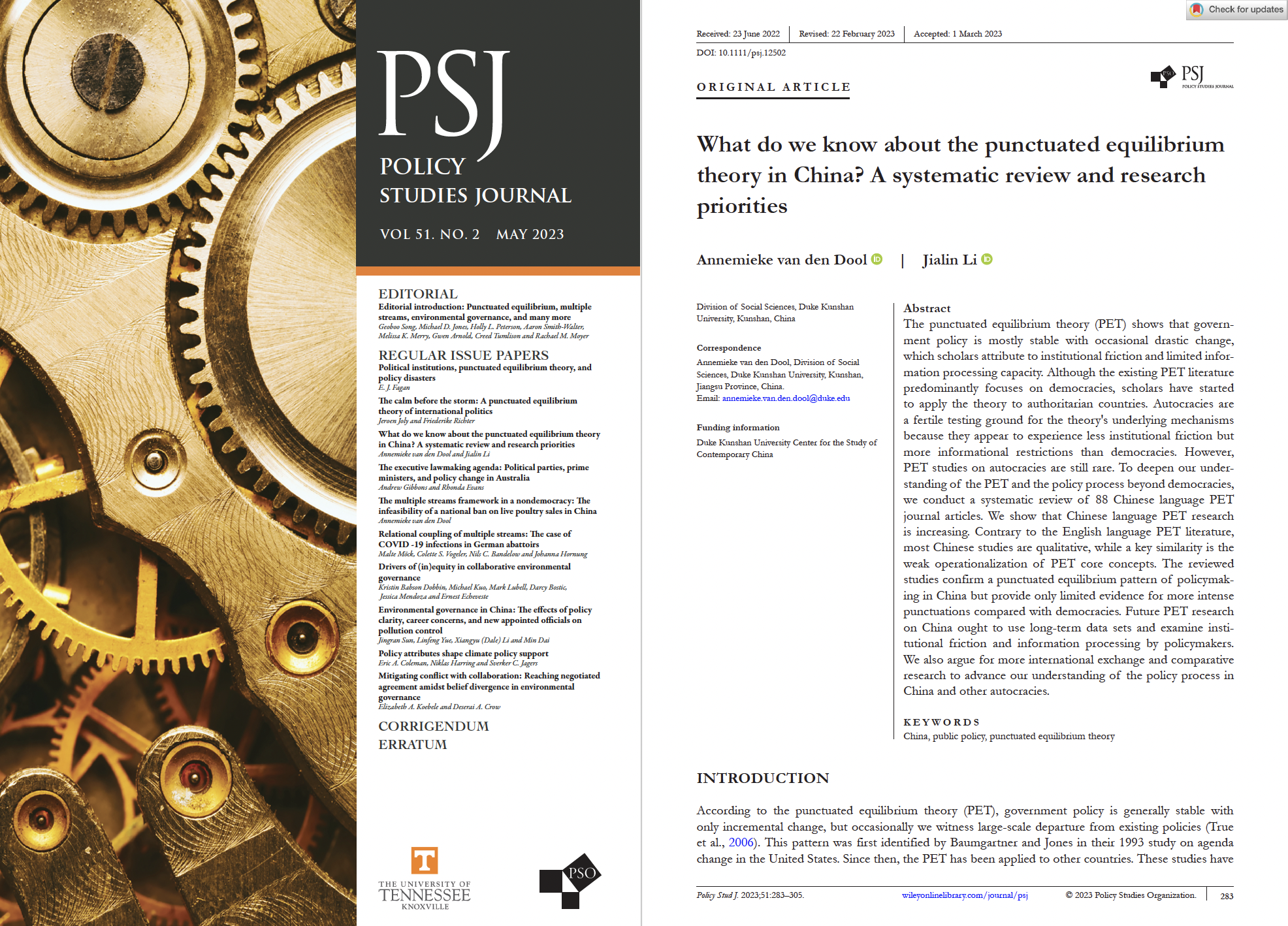
Below is a 1-page summary (click here to download) and an interview about the project with my co-author Jialin Cammie Li and me.
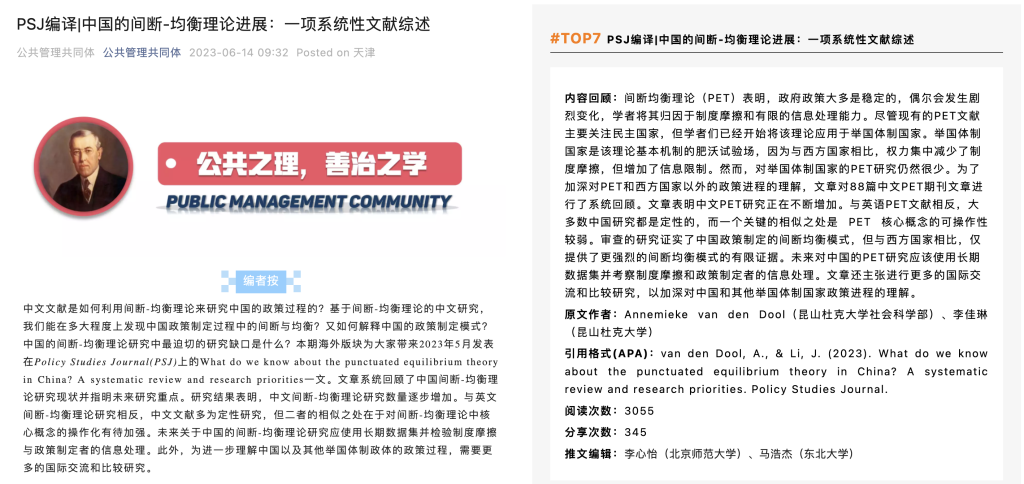
The article has been featured on the popular Chinese WeChat channel Public Management Community (公共管理共同体) and was ranked 7th on the list of most influential overseas articles featured on this channel in 2023. We have also written about this project on the Policy Studies Journal blog.
Teaching the Multiple Streams Framework
– with Nikolaos Zahariadis (Rhodes College) & Evangelia Petridou (Mid-Sweden University)
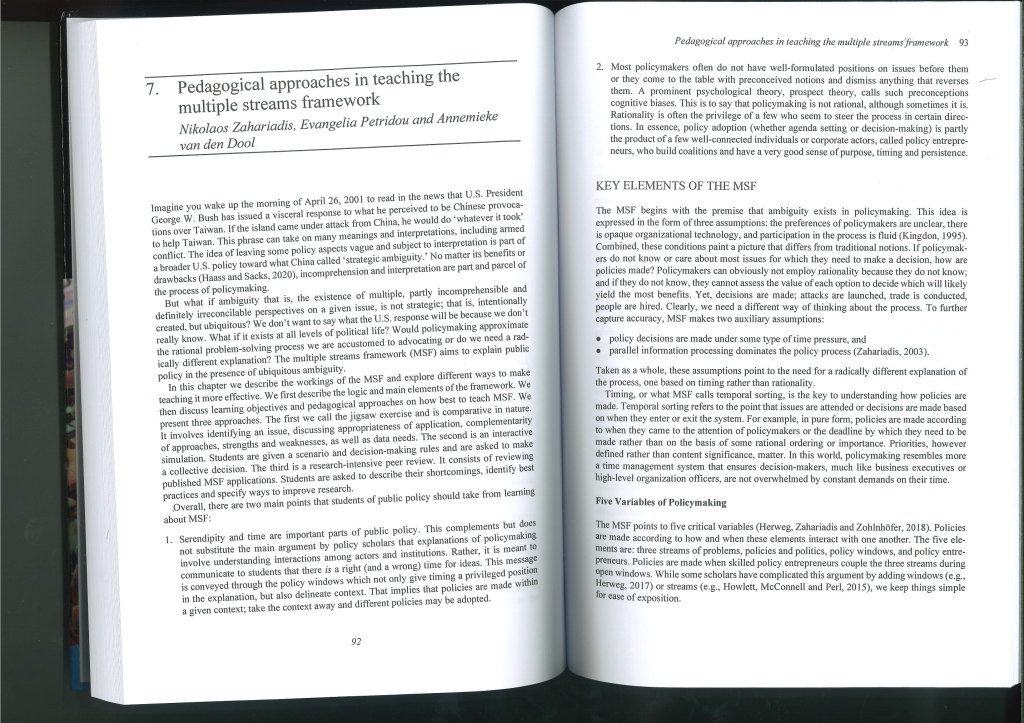
This book chapter describes the main concepts, key assumptions, and different hypotheses of the Multiple Streams Framework (MSF) as well as learning objectives and pedagogy on how best to teach MSF. It has been published in the “Handbook of Teaching Public Policy,” edited by Emily St. Denny and Philippe Zittoun (2024). Click here to request a copy of this chapter.